
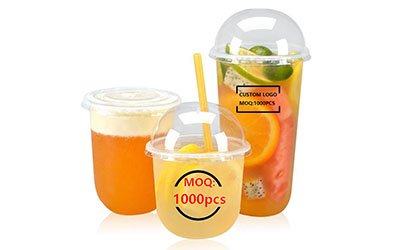
Boba Cups Wholesale: How to Choose the Right Cup and Supplier
Looking for boba cups wholesale for your bubble tea shop, café chain, or distribution business? The right cup does more than hold a drink — it keeps the lid seal tight in delivery, shows off the layers of your drink, and repeats your brand on every takeaway order. This guide walks through the specs that actually matter when sourcing boba cups at wholesale volume: shape, rim size, material, printing and minimum order quantity. Whether you are switching suppliers or launching a new menu, it will help you order the right cup the first time.
Why your cup choice affects more than presentation
A bubble tea cup is a working package. It travels in a delivery bag, gets shaken, sits in a cup carrier, and is judged by the customer before the first sip. Three things go wrong most often when shops buy the wrong cup:
- Leaks in transit. A cup that is not rigid enough deforms under a full load of ice and tea, breaking the seal against the lid or sealing film.
- Lid and sealer mismatch. A cup bought at 90mm will not seal on equipment set up for 95mm. This is the single most common ordering mistake.
- The drink does not look right. Customers recognise a boba shop by its cup silhouette. Changing shape changes how the product reads on social media and in hand.
Getting the specification right at the sourcing stage avoids all three.
1. Cup shape: why the U-shape became the standard
The U-shape cup — a slim, curved body with no ridges and no straight walls — is now the silhouette customers read instantly as a boba cup. It replaced the older straight-walled cup because it feels slimmer in the hand, stacks efficiently behind the counter, and gives the drink a clean, uninterrupted view.
If your shop already uses U-shape cups, staying with the same profile means you can change supplier without changing how your drinks look. We supply U-shape cups in PP, PET and PLA, so you can keep the silhouette and switch material when your market or sustainability policy requires it.
Related: U-shape PP cups with lid — one-piece injection molded, 90mm rim.
2. Rim size: the spec you must get right
Rim size decides whether your cup works with your existing lids, sealing film and cup sealer. Order by rim size, not by capacity — two cups with the same volume can have different rims.
| Rim size | Typical use | Closure |
| 89mm | U-shape cold drinks, smoothies, juice | Flat or dome lid, sealing film |
| 90mm | The standard bubble tea rim; most sealing machines | Dome, sip, plug lids, sealing film |
| 95mm | Larger cold drinks, iced coffee, some boba formats | Dome lids, clear PET lids |
Our boba cups come in 90mm and 95mm so you can match the cup to your current equipment. If you run a 90mm sealer, ordering 90mm cups means no machine adjustment and no new lid supplier.
For cold drinks with toppings, a wide-opening dome lid is often the better match — a 45mm opening lets customers drink through large boba straws without clogging.
Related: Clear PET large-hole dome lids — fits 90mm and 98mm cups.
3. Material: PP vs PET vs PLA
The material changes how the cup performs, what it costs, and which drinks it can hold.
| Material | Best for | Strengths | Limits |
| PP (polypropylene) | Hot and cold boba, milk tea | Injection molded for rigidity; handles heat; flexible lid options | Less crystal-clear than PET |
| PET | Cold drinks where clarity sells the product | Crystal-clear transparency; shows drink layers | Cold service only |
| PLA | Eco-positioned menus, cold drinks | Plant-based, compostable; keeps the U-shape look | Cold service below 50°C |
Practical rule: choose PP if you serve anything warm or want maximum rigidity, PET if the visual clarity of the layered drink is your selling point, and PLA if compostability is part of your brand promise and your drinks stay cold.
Related: U-shape clear PET cups 89mm · Compostable U-shape PLA cups 89mm
4. Capacity and how to choose it
Most boba programmes sit in the 12–22oz range. Smaller sizes suit fruit tea and light menus; 16–22oz suits milk tea with toppings and is the format most customers expect from a boba shop.
When you choose capacity, check it against two things: the rim size your sealer takes, and the fill line your recipes need. A cup that is too large for your typical drink leaves a half-empty look; too small and toppings push the liquid into the lid seal.
5. Printing and branding
Takeaway cups are the cheapest advertising your shop owns. Three printing methods are common at wholesale volume:
- Flexo printing — economical for 1–6 colours, good for large runs.
- IML (in-mould labelling) — full-colour graphics with a premium finish, applied during moulding.
- Screen printing — suited to simpler, high-contrast logos.
Ask for samples before committing: print colour on transparent PET and on matte PP looks different, and a logo that works on one may need adjusting for the other.
6. MOQ and what to ask a supplier before ordering
Minimum order quantities vary by how the cup is made and printed. Standard U-shape PP boba cups start at 1,000 pcs; injection molded and custom-printed programmes typically start from 10,000 pcs.
Before you place a wholesale order, ask any supplier these five questions:
- What rim sizes do you have in stock, and will my current sealer fit?
- Can I get physical samples with my logo before production?
- What certification covers the material (FDA-compliant material, SGS, ISO 9001)?
- What is the MOQ for my exact size and print, not just your standard cup?
- How are cups packed for export, and what is the lead time?
A supplier who answers all five with specifics — not ranges — is usually the one who has actually made the product before.
Why buy direct from the factory
Yulong Packaging has manufactured food-grade disposable cups in Dongguan since 2006. We run injection molding and thermoforming machines plus six flexographic printers, producing around 10 million cups a month for bubble tea chains and distributors in North America, Europe and Southeast Asia.
Buying direct means cups, lids, sealing film and custom printing come from one place — so rim fit is checked in-house and you deal with one supplier, not three.
Related: PP injection cup guide · Boba cups wholesale product page
Frequently asked questions
What is the standard rim size for boba cups? 90mm is the most common rim for bubbletea sealing machines, with 95mm used for larger cold drinks and 89mm common for U-shape PET and PLA cups. Match the rim to your existing sealer before ordering.
Can I use the same lid on 89mm and 90mm boba cups? No. Lids and sealing film are rim-specific. A 90mm lid will not seal correctly on an 89mm cup, so order cups and closures as a matched set.
Are PP boba cups safe for hot drinks? Yes. PP cups are injection molded and handle both hot and cold fill. PET and PLA cups are for cold service only — PLA is rated below 50°C.
What is the MOQ for custom-printed boba cups? Standard U-shape PP boba cups start at 1,000 pcs. Injection molded cups with custom printing typically start at 10,000 pcs. Ask for the MOQ on your exact size and print specification.
Can I get samples before placing a wholesale order? Yes. Tell us your rim size and target capacity and we will confirm what fits, arrange samples with your logo, and quote within 24 hours.
Do you ship boba cups outside China? Yes. We supply bubble tea chains and distributors in North America, Europe and Southeast Asia, with export packing and volume pricing.
Get a quote
Tell us your rim size, capacity, material and print design — we will confirm the fit, send samples and quote within 24 hours. Contact Yulong Packaging for wholesale pricing.