
Every first-time buyer asks us the same question: should I import PET, PP or PLA cups? The honest answer is that none of the three is “best” — each one wins in a different situation, and the wrong choice usually comes from copying what another business ordered instead of matching the material to your own drinks, market and climate.
This guide compares the three materials the way a sourcing manager would: clarity, heat tolerance, cost behaviour, certifications and which markets each one actually sells in. By the end you should be able to shortlist a material in five minutes — and know which questions to ask a supplier before you wire a deposit.
The 30-Second Answer
| PET | PP | PLA | |
| Clarity | Crystal clear | Translucent to milky | Clear, slightly hazy |
| Max drink temperature | Cold only (≤60 °C) | Hot and cold (≤100 °C) | Cold only (≤50 °C) |
| Recycling code | #1, widely recycled | #5, regionally recycled | #7, industrial composting |
| Compostable | No | No | Yes, certified facilities |
| Relative cost | Baseline | Higher per unit | +20–50% over PET |
| Best for | Iced coffee, bubble tea, juice | Hot drinks, thick shakes, reusable-feel cups | Eco-positioned brands in EU / AU / CA |
If you already know you need clarity and cold drinks, our complete PET cups buying guide goes deeper on sizes and lids. If sustainability is the whole point of your brand, jump to the PLA section — it has the certification checklist most buyers skip.
PET: The Default for Cold Drinks
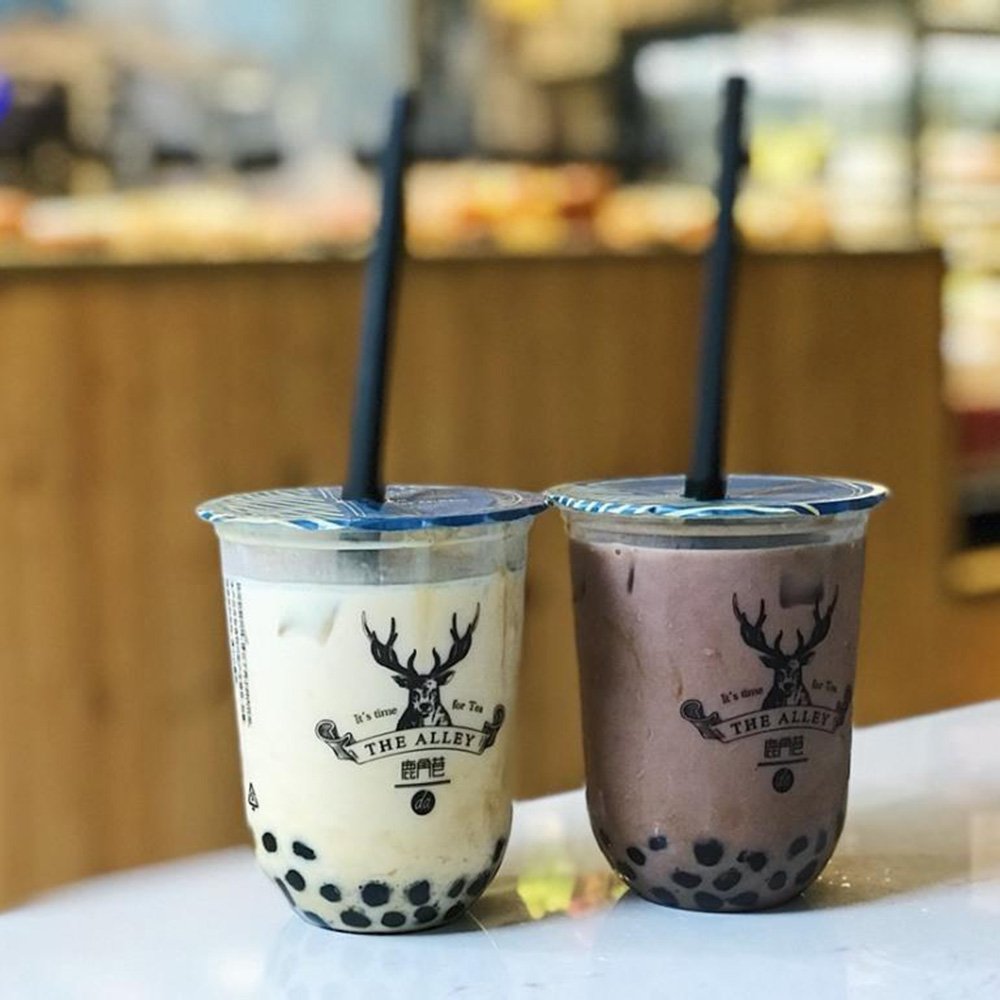
PET is what most people picture when they think of a clear plastic cup. It has the best optical clarity of the three, which matters more than most buyers expect: a milky cup makes an iced latte look cheap, while a crystal-clear one makes the same drink photograph like a café menu shot.
Its limits are thermal. PET softens around 60 °C, so it is strictly a cold-drink material — iced coffee, bubble tea, smoothies, fresh juice, cold brew. Put a hot drink in a PET cup and it will deform in the customer’s hand; this is the single most common complaint we see from buyers who picked PET to save money and then expanded their menu.
Operationally, PET is also the easiest material to ship. It nests tightly, so a 40-foot container carries more drinkable units per cubic metre than injection-moulded PP — on a full-container order, freight per cup can differ by 15–25%. And PET is recycling code #1, the most widely accepted plastic in municipal streams, which simplifies the sustainability conversation with your own customers.
We produce PET cold cups in the standard 89 mm, 92 mm, 95 mm and 98 mm rim diameters, U-shape and straight-wall, from 9 oz to 32 oz — see the PET cups range and the matching PET dome, flat and sip lids.
PP: When You Need Heat, Strength or Reuse
PP wins wherever temperature or toughness is the deciding factor. Injection-moulded PP cups handle boiling-adjacent drinks (up to roughly 100 °C for food-grade grades), tolerate microwaving, and flex instead of cracking — a dropped PP cup usually survives; a PET cup often splits.
That toughness is why PP dominates three niches:
- Hot and hybrid menus. A shop selling both hot chocolate and iced tea wants one cup stock. PP is the only material here that covers both safely.
- Thick, heavy drinks. Taros, smoothies with toppings, 1 L portions — our torch cups and bucket cups exist because thin-walled PET flexes under that weight.
- Premium-feel takeaway. Rigid walls, a solid hand-feel and matte or glossy finishes read as “reusable quality”, which supports higher menu prices. Our 650 ml black square cups were developed exactly for that positioning — see also square vs round cups.
The trade-offs: PP is translucent rather than glass-clear, and per-unit cost runs higher than PET because injection moulding is slower and the parts are heavier. The freight point cuts the other way — PP cups stack but nest less deeply, so check container loading before comparing prices per unit.
Full range in PP plastic cups and PP injection cups, with PP sip, dome and plug lids including the flip-top styles used for lemon tea and coffee delivery.
PLA: Selling Sustainability, With the Paperwork to Prove It
PLA is the choice when “compostable” is part of what your customer is buying. It is made from plant starch (typically corn), performs like PET visually — clear, rigid, cold-drink-only — and breaks down in industrial composting facilities instead of persisting in landfill.
Three things buyers get wrong with PLA:
- Heat. PLA distorts around 50–60 °C. It is a cold-cup material, full stop. Hot drinks go in paper or PP.
- Marketing claims. “Biodegradable” and “compostable” are regulated words in the EU, Australia and parts of North America. You can only use them if the product is certified — ask your supplier for EN 13432 (EU), ASTM D6400 (US) or AS 4736 (AU) certificates, and match the certificate holder to the factory on your invoice.
- Local infrastructure. PLA only composts in industrial facilities. If your market has no composting collection (true in much of North America), the honest pitch is “plant-based, certified compostable” — not “it will disappear in your backyard”. Overclaiming here is what triggers greenwashing complaints.
Where PLA genuinely sells: European café chains responding to single-use plastic directives, Australian and Canadian brands where compostable packaging is a purchasing criterion, and any cold-drink business whose customers pay a premium for eco positioning. Expect to pay roughly 20–50% more than PET, and treat that premium as a marketing cost, not a material cost. Our market analysis in the PLA cups market & buying guide covers which countries convert best, and the range itself is in PLA cups plus PLA lids — including the compostable salad bowls many cafés add as a second line.
What It Costs: The Real Comparison
Per-unit prices move with resin markets, so we won’t quote numbers that go stale. What stays stable is the structure of the comparison:
| Factor | How it moves the price |
| Resin market price | PET and PP track oil; PLA tracks corn starch and capacity. Quotes older than 30 days are guesses. |
| Wall weight | PP injection parts weigh more than equivalent PET cups — you pay in resin and in freight. |
| Nesting efficiency | Deep-nesting PET fits more units per container; check freight per cup, not price per cup. |
| Print & decoration | Custom printing on all three, but IML (in-mould labelling) is a PP-process technique — see custom logo printing for options. |
| Lid pairing | Lids are material-specific. A 95 mm PET lid does not seal a 95 mm PP cup — see the lid matching guide. |
Choose by Business Type
| If you are… | Default material | Why |
| Bubble tea shop or distributor | PET (78/89/92/95/98 mm) | Clarity sells toppings; widest lid ecosystem; lowest landed cost |
| Coffee chain with hot & iced | PP + paper double-wall | One stock covers hot; paper for in-store hot, PP for delivery |
| Juice / smoothie bar | PET (89/92 mm) | Clarity, tight nesting, small sizes exist |
| Eco brand in EU / AU / CA | PLA (certified) | Sustainability is the product; verify certificates before deposit |
| Delivery-heavy dark kitchen | PP torch/bucket cups | Leak-resistant flip lids; survives delivery handling |
Mistakes We See in Every Container Order
- Choosing one material for a mixed menu. A menu with hot drinks needs PP or paper somewhere. Mixing stocks is normal; melting cups is not.
- Matching lids by rim size alone. Rim diameter must match within the same material family — the geometry differs between PET and PP. Re-check every new order against the lid compatibility table.
- Judging clarity from photos. Lighting can make PP look clear and PET look hazy. Ask for physical samples of the actual cup, not a catalogue.
- Ordering PLA without certificates for your market. If customs or a retailer audits you and the paperwork says a different factory, the container still lands — but the claim doesn’t.
- Comparing quotes on unit price only. Nesting ratio, wall weight and lid pairing change landed cost by more than the unit discount does. Compare per-container, per-cup.
FAQ
Can I put hot drinks in PET cups?
No. PET softens around 60 °C and will deform with a hot drink in it. Use PP injection cups or double-wall paper cups for anything hot.
Is PLA really better for the environment?
It is plant-based and industrially compostable, which is a genuine advantage where composting collection exists. It is not a licence to overclaim — “certified compostable” is the defensible phrase, and only with a valid EN 13432 / ASTM D6400 / AS 4736 certificate behind it.
Which material is cheapest?
PET is normally the baseline; PP runs higher per unit (heavier parts, slower moulding); PLA runs 20–50% over PET. But landed cost per cup — after nesting ratio and freight — is the number that matters, and it occasionally reorders the ranking on full-container orders.
Can I mix materials in one container?
Yes. Mixed loading (for example PET cups plus PP lids plus paper cups) is standard for distributors — tell us the split when requesting a quote so we can plan the container loading plan properly.
What about custom printing on each material?
All three take printing. PET uses dry-offset or screen printing; PP injection supports both printing and IML labels for the premium metallic look; PLA prints like PET. Minimum quantities and artwork specs are on the custom printing page.
Related Guides
- Disposable PET Plastic Cups: The Complete Buying Guide
- PLA Cup Market & Buying Guide: Compostable Cups for Cafes
- Cup Lid Sizes Guide: How to Match a Lid to Your Cup
- Torch Cups: The Complete Guide to PP Injection Torch Cups
- Boba Cups Wholesale Buying Guide
- Square Plastic Cups vs Round Cups: When to Choose Square