
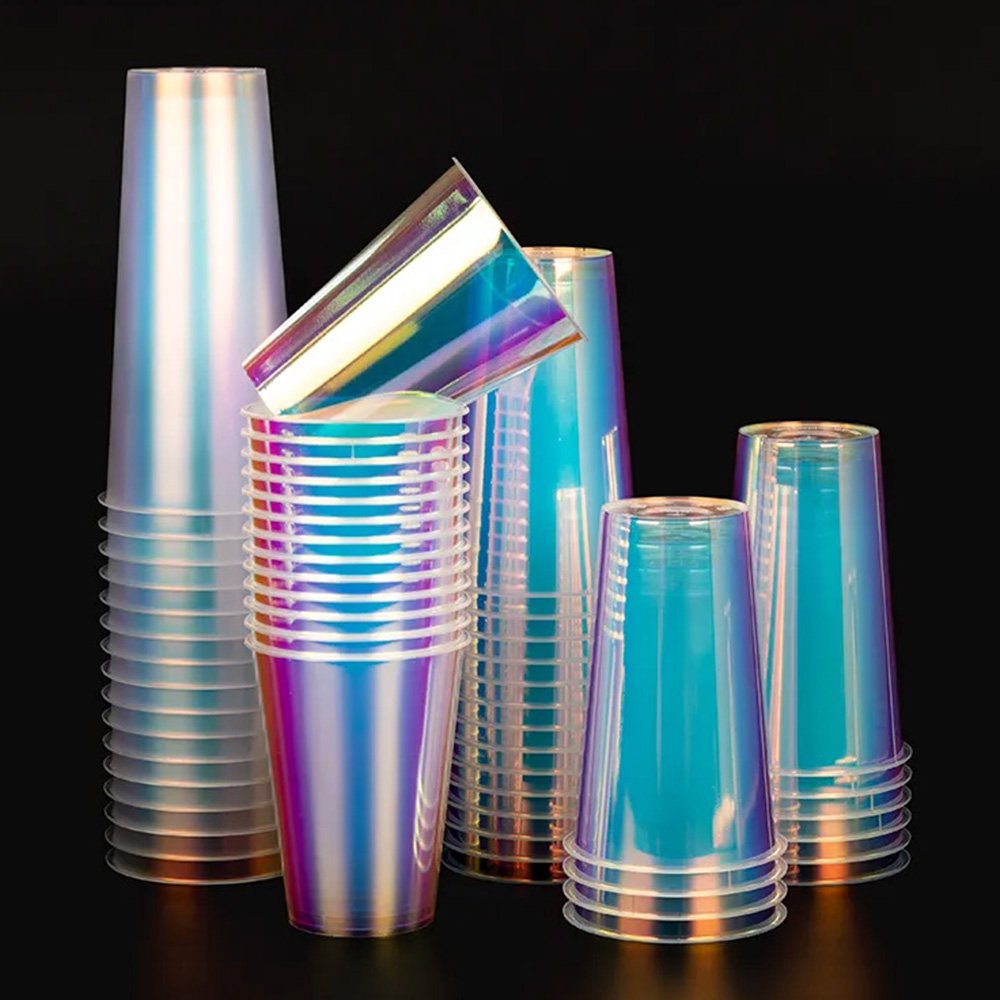
Plastic cups come in more sizes than most buyers expect — from small 5 oz tasting cups to 32 oz (1000 ml) drink tubs. Choosing the wrong size means overpouring, spilled drinks, or a menu that looks smaller than it should. This guide gives you a clear oz-to-ml chart, matches each size to the drinks it suits, and shows you how to confirm the diameter before you order lids.
Plastic Cup Sizes: Oz to Ml Chart
Use this chart as a quick reference. The ml figures follow the industry’s common “safe fill” labels, which are rounded for practical use rather than exact fluid-ounce conversion.
| Cup size (oz) | Approx. ml | Typical use |
| 5–9 oz | 150–270 ml | Espresso, tasting, small iced coffee |
| 12 oz | 355–360 ml | Standard iced coffee, soda, water |
| 16 oz | 473–500 ml | Bubble tea, large iced drinks, frappuccino |
| 20–22 oz | 591–650 ml | Large boba, smoothies, fruit tea |
| 24 oz | 710 ml | Extra-large cold drinks, shakes |
| 32 oz | 946–1000 ml | Party drinks, fruit tea buckets, iced tea |
Why does a “16 oz” cup say 500 ml? One US fluid ounce is about 29.6 ml, so 16 oz converts to roughly 473 ml. Suppliers often label it 500 ml because that is the safe fill capacity rounded to a convenient number, and because cup shape changes the real volume. What matters when ordering is the labelled ml value on the spec sheet, not the exact conversion.
For a closer look at our largest formats, see the torch cup sizes guide (500 ml, 700 ml and 1000 ml) and our 1000 ml torch cups.
Which Cup Size Fits Which Drink?
Matching size to drink is the fastest way to control portions and keep customers happy.
- Espresso and samples (5–9 oz): small tastings and children’s drinks. Our 78mm PET cups (5.5–9 oz) cover this range.
- Iced coffee and soda (12 oz): the most common “regular” size. A clear PET cup shows the drink’s colour and layers.
- Bubble tea and large iced drinks (16–22 oz): this is where most boba menus live. Our boba cups wholesale range runs 12–22 oz, and the boba buying guide explains how to choose within it.
- Smoothies and fruit tea (22–32 oz): larger formats need thicker walls and a secure lid. See our 32 oz PP cups with stopper lid and 32 oz clear PET cups.
If you are still deciding between materials, PET vs PP vs PLA cups explains which plastic suits cold drinks, hot drinks and compostable programmes.
Cup Size Is Not the Same as Diameter
This is the mistake that costs buyers the most money: capacity (oz/ml) and rim diameter (mm) are two different measurements. A 16 oz cup can have a 90 mm or a 98 mm rim depending on the mould. If you order cups and lids from different listings, a matching ounce rating does not guarantee the lid will seal.
Always confirm the rim diameter in millimetres before ordering lids. Our separate cup lid sizes guide lists which lids fit 90, 95 and 98 mm rims. Common examples in our range:
How to Choose the Right Size for Your Business
Four questions narrow it down quickly:
- What is the drink? Iced coffee and soda suit 12 oz; boba and smoothies usually need 16–22 oz to leave room for ice and toppings.
- What will the lid be? Decide the lid type first (flat, dome, straw slot), then pick a cup with a matching diameter. See our large-hole dome lids for boba.
- How many SKUs can you stock? Most cafés run on two or three core sizes. Fewer sizes mean simpler inventory and more consistent portions.
- What is the material requirement? Cold drinks use PET or PP; compostable programmes use PLA. Our compostable U-shape PLA cups and U-shape PP cups with lids cover both.
For shaped cups, square plastic cups vs round cups explains when a square format is worth it, and our 650 ml black square cups show the format in practice.
Frequently Asked Questions
How many ml is a 16 oz cup? About 473 ml by exact conversion, but most suppliers label it 500 ml as a rounded safe-fill capacity. Check the spec sheet for the actual labelled volume.
What size cup is best for bubble tea? 16–22 oz is the standard range. It leaves room for ice, tapioca pearls and foam without looking half-empty. Our boba cups run 12–22 oz.
Does cup size tell me what lid fits? No. Capacity (oz) and rim diameter (mm) are separate. A 16 oz cup may have a 90 mm or 98 mm rim — always confirm the diameter before ordering lids.
What is the most common disposable cup size? 12 oz is the standard “regular” size for soft drinks and iced coffee in the US. 16 oz is the most common large size.
Can I use the same cup for hot and cold drinks? Not always. PET suits cold drinks; PP tolerates heat better. Confirm the material before using a cup for hot liquids.
Related Reading
- Cup lid sizes guide
- Torch cup sizes guide
- Boba cups wholesale buying guide
- PET vs PP vs PLA cups
- Square plastic cups vs round cups
- Disposable PET plastic cups buying guide